Muskan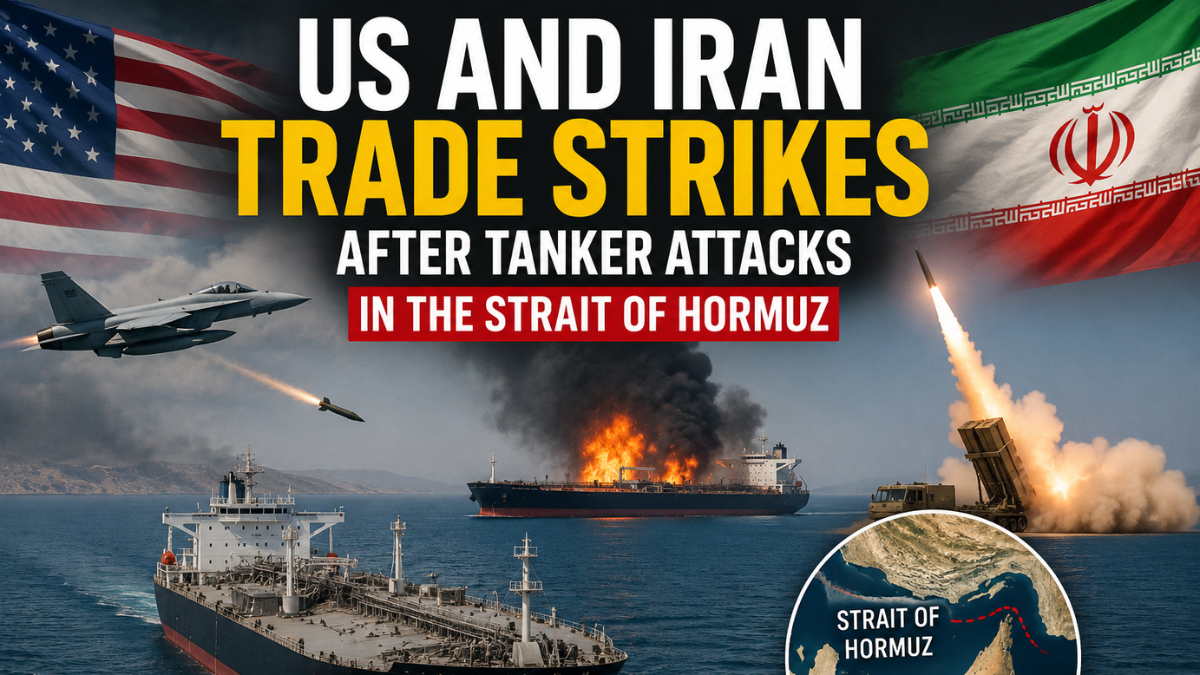
US and Iran trade strikes have sharply escalated tensions in the Middle East after three commercial oil tankers were attacked in the Strait of Hormuz. In response, the United States launched military strikes on Iranian targets, while Iran later carried out retaliatory attacks against U.S. military facilities in Bahrain and Kuwait.
The exchange has renewed concerns over regional security, the safety of commercial shipping, and the stability of one of the world’s busiest and most strategically important maritime trade routes.
U.S. officials said they launched military action after attacks on commercial ships in the strategic waterway. Iran denied involvement in the tanker incidents and condemned the U.S. strikes, calling them a violation of recent diplomatic agreements.
US and Iran Trade Strikes Escalate Following Tanker Attacks
The recent exchange of strikes between the US and Iran started after three commercial tankers were damaged while passing through or near the Strait of Hormuz.
U.S. Central Command (CENTCOM) reported that it struck more than 80 Iranian targets. The operation included attacks on over 60 boats linked to Iran’s Islamic Revolutionary Guard Corps (IRGC), along with missile launch sites, command centers, and other military facilities.
The U.S. military said the strikes were meant to respond to attacks on commercial ships and to help protect freedom of navigation in international waters.
Iran Announces Retaliatory Military Action
After the U.S. strikes, Iranian state media reported explosions in Qeshm Island, Bandar Abbas, and Sirik, and said several people were injured by shrapnel.
The IRGC later said it launched missiles and drones at U.S. military facilities in Bahrain and Kuwait. Iranian officials claimed they targeted several military sites, but there has been no independent confirmation of the reported damage.
Iran also criticized the U.S. strikes, calling them a violation of earlier agreements and warning it would act to protect its national interests.
Shipping Attacks Raise International Concern
The exchange of strikes between the US and Iran came after reports of attacks on three commercial tankers traveling through the Strait of Hormuz.
The United Kingdom Maritime Trade Operations (UKMTO) said one ship caught fire after being hit by an unidentified object. Two other tankers also reported damage but were able to continue their journeys.
The organization did not say who was responsible for the attacks.
Qatar and Saudi Arabia later accused Iran of targeting ships linked to their countries. Iran denied the accusations, saying it is committed to safe maritime navigation and warning ships to follow established transit rules.
Diplomatic Efforts Face New Pressure
The recent strikes between the US and Iran have put more pressure on diplomatic efforts between Washington and Tehran.
Before the military action, the United States canceled a waiver that had temporarily eased some oil sanctions under an agreement signed last month. Iranian officials called this a violation of that agreement.
Despite the military escalation, U.S. officials said they are still open to continuing diplomatic talks with Iran.
Strait of Hormuz Remains a Critical Waterway
The Strait of Hormuz is one of the worldThe Strait of Hormuz is one of the world’s key shipping routes, carrying a large portion of global oil exports each day. ect international energy markets, commercial shipping, and regional stability. The latest exchange between Washington and Tehran has renewed concerns about the security of vessels operating in the Gulf.
Analysts are closely watching the situation as governments in the region call for stability and the protection of international shipping.
What the US and Iran Trade Strikes Mean
The recent strikes between the US and Iran show how fragile security is in the Middle East and the risks facing global maritime trade.
Both governments continue to defend their actions, but the exchange has increased worries about the future of diplomatic talks and the safety of commercial shipping through the Strait of Hormuz.
With no sign of tensions easing, the world is watching to see if diplomacy can prevent more military action and help keep one of the world’s most important waterways stable.