Muskan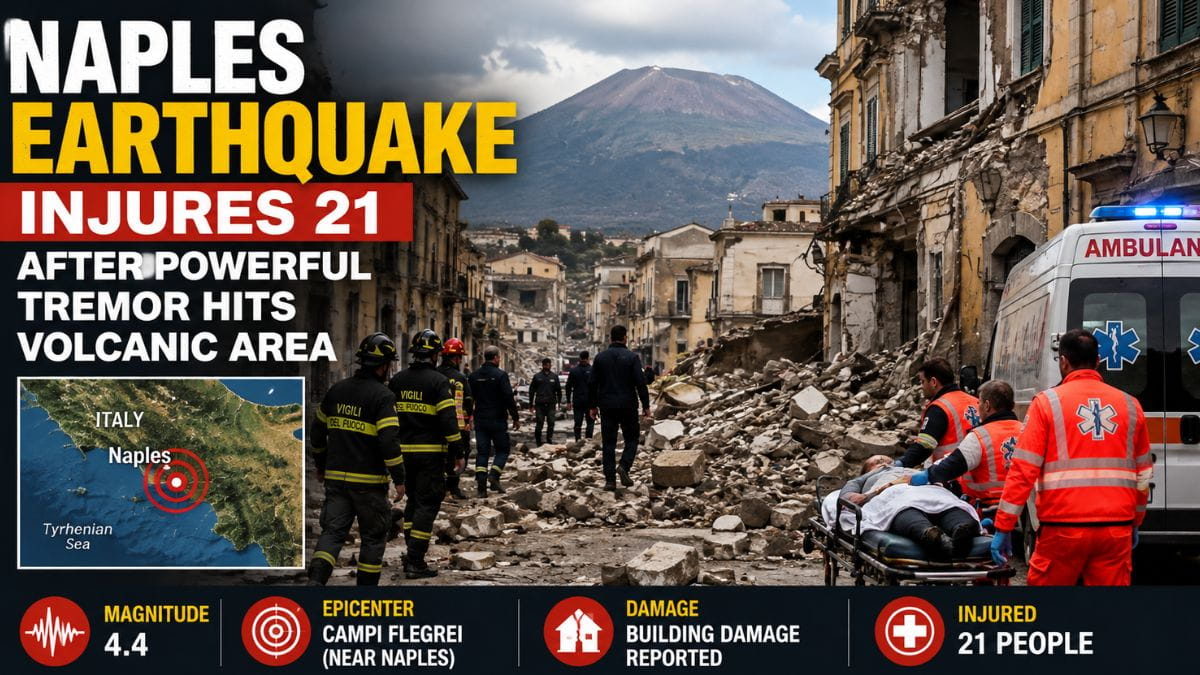
The Naples Earthquake is an earthquake of magnitude 4.7 that struck the Campanian area near Naples this past Friday evening. This earthquake, which is part of the active Campi Flegrei volcanic region near Naples, has injured at least 21 people, left homes and churches destroyed, caused transport delays and even forced dozens of residents to evacuate their homes, after emergency crews arrived on the scene to assess the damage.
Authorities are still assessing the damage from the quake this week, as more quakes happen in one of Europe’s most closely watched volcanic areas.
What Happened During the Naples Earthquake?
The earthquake struck at 7:49 p.m. local time and centered on the area between Pozzuoli and Quarto, to the west of Naples. According to Italy’s National Institute of Geophysics and Volcanology (INGV), the earthquake reached a magnitude of 4.7 and had a focal depth of 3 kilometers.
The earthquake was widely felt throughout the city of Naples and surrounding areas, causing people to flee the buildings.
After the main shock, ten smaller aftershocks were recorded by monitoring stations, keeping emergency service officials on edge throughout the night.
Buildings Damaged Across the Campi Flegrei Area
Buildings damaged in the Campi Flegrei area after the earthquake occurred near Naples. The earthquake caused structural damage to several buildings and churches, according to officials. In addition, authorities reported:
- Rockfalls from tuff cliffs
- Power outages
- Inspections of public buildings
- Safety checks of transportation infrastructure
- Emergency crews were sent to check damaged buildings and help residents.
- Authorities said that eighteen families had to leave their homes temporarily because the structures were assessed as unsafe.
Injuries and Emergency Response
Emergency services reported 21 people injured, including two seriously.
The injured were treated while civil protection authorities conducted inspections in the affected communities.
Civil Protection Minister Nello Musumeci noted that the earthquake damaged several buildings, leaving many residents homeless and causing significant damage to churches and other historic sites.
Transport Services Disrupted
The earthquake caused temporary disruptions to transport in the Naples region.
The subway and some trains in the Cumana and Circumflegrea lines were halted for safety checks by engineers.
The Port of Pozzuoli was forced to close following the earthquake damage to one of the piers used by ferries to reach the islands of Procida and Ischia.
Railway services to and from the city’s transportation hub were re-opened during the night, however, passengers faced significant delays of more than six hours.
Why the Naples Earthquake Matters
The Naples Earthquake happened in the Campi Flegrei (Phlegraean Fields) – a huge caldera (a volcano’s crater) west of Naples.
There have been frequent seismic disturbances in this region, caused by tectonic movements, with injections of magma from time to time. Geologists note that in recent months, signs of instability in the field have been growing, and Italian geologists are watching the situation with interest.
So on Friday, scientists at INGV said it was the strongest earthquake in the area since the beginning of its seismological observations.
Ongoing Monitoring of the Volcanic Region
Experts are closely watching Campi Flegrei due to a complicated volcanic system and a significant number of earthquakes that have been happening there recently. On June 27, 2025, another earthquake, registering at 4.6 magnitude, occurred in the region. Authorities remind people of the current situation and ask to be careful and follow the recommendations issued by local officials in regards to further inspections of the area.
Key Takeaways
- A 4.7-magnitude earthquake shaked Naples on Friday evening.
- 21 people were injured, including two seriously.
- Eighteen families had to leave their homes because of the damage to their houses.
- Trains, ferries and electricity were cut off for some time.
- Authorities are watching for more activity in the Campi Flegrei and other areas.
Conclusion
The latest instance of the Naples Earthquake is yet another warning sign about the region being situated on a tectonic plate. While the emergency services personnel worked around the clock, inspecting the damage and repairing what they could, authorities were quick to remind the public that despite efforts to make the area safe, geologists were still monitoring the situation due to potential aftershocks and volcanic activity in Campi Flegrei.